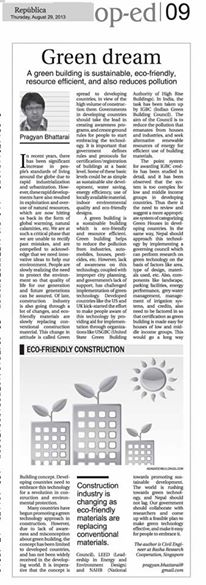
Green Dream
A Green Building is Sustainable , Eco-friendly, resource efficent and also reduce pollution.
Over the years, there has been a significant increase in the standard of living globally due to rapid industrialization and urbanization. However, these advancements have also led to the exploitation and overuse of natural resources, resulting in global warming and natural calamities. We have reached a critical juncture where it is necessary to address these drawbacks by rethinking our approach and focusing on creating innovative, eco-friendly environments.
Recently, the construction industry has also seen significant changes, with eco-friendly materials gradually replacing traditional construction materials to protect the environment and human health. This shift has been driven by the overuse and abuse of environmental resources, which have led to global warming, the heat island effect, and other hazardous impacts. This trend is widely recognized as the Green Building concept. Developing countries should also adopt this technology to revolutionize construction practices and enhance environmental protection.
Many countries are incorporating green technology in construction. However, due to a lack of awareness and misconceptions about green buildings, this technology has predominantly been adopted in developed countries and has not gained widespread acceptance in the developing world. It is crucial to spread this concept to developing countries, where rapid development is occurring. To facilitate this, there needs to be greater awareness and education about green building practices. Governments in developing countries should take the lead in educating the public and establishing basic guidelines to encourage the adoption of green technology. Essential guidelines could include sustainable site development, water conservation, energy efficiency, the use of locally available materials, indoor environmental quality, and eco-friendly design.
The importance of protecting the environment to maintain a high quality of life for current and future generations is increasingly recognized. The Green Building concept aims to reduce pollution from industries, automobiles, homes, pesticides, and other sources. However, challenges such as lack of awareness, inadequate city planning, and insufficient support from government and local bodies have hindered the effective implementation of green technology.
A Green Building is one that is environmentally friendly and resource-efficient. Developed countries like the USA and the UK have promoted this technology through organizations such as the US Green Building Council (USGBC), Leadership in Energy and Environmental Design (LEED), and the National Authority of High-Rise Buildings (NAHB). In India, the Indian Green Building Council (IGBC) has taken similar initiatives to reduce pollution from homes and industries and seek alternative renewable energy resources for efficient building materials. Research indicates that the point system for awarding IGBC credits is too complex for low- and middle-income households in developing countries like India and Nepal. Therefore, there is a need to review and propose a more accessible system for categorizing homes as Green Houses in these environments.
Nepal should also consider adopting this technology by establishing a governing council to conduct research on various factors such as area, design type, and materials used. This research should aim to develop new plans and credit assignments that are more achievable. Additionally, factors such as landscape, parking facilities, energy performance, greywater management, and irrigation system management should be considered to simplify certification for new and existing low- and middle-income housing. As the world advances in green technology, Nepal should not lag behind. Government officials, researchers, and scholars should collaborate to explore feasible ways to implement green technology effectively, ensuring that it is embraced by the public without difficulty.
Nepali Version
हरित भवन प्रविधि र यसको विकासशील राष्ट्रहरूमा अपनाउने महत्त्व
वर्षहरूको विकास र तीव्र औद्योगिकीकरण र शहरीकरणका कारण विश्वभरका मानिसहरूको जीवनस्तरमा महत्वपूर्ण वृद्धि भएको छ। तर, यी तीव्र विकासहरूले प्राकृतिक स्रोतहरूको अत्यधिक प्रयोग र शोषणको परिणामस्वरूप विश्वव्यापी तापमान वृद्धिका साथै प्राकृतिक प्रकोपहरू निम्त्याएका छन्। हामी अहिले यस्तो आलोचनात्मक अवस्थामा पुगिसकेका छौं, जहाँ यी समस्याहरूलाई सुधार गर्न असमर्थ छौं र नयाँ नवोन्मेषी र पारिस्थितिकीय रूपमा अनुकूल वातावरणको लागि हाम्रो सोचलाई पुन: परिभाषित गर्न आवश्यक छ।
हालसालै, निर्माण उद्योग पनि धेरै परिवर्तन हुँदैछ र पारिस्थितिकीय अनुकूल सामग्रीहरू परंपरागत निर्माण सामग्रीहरूको स्थानमा लैजाने क्रम बढिरहेको छ जसले वातावरण र मानव स्वास्थ्यको सुरक्षा गर्ने प्रयास गर्दैछ। यस परिवर्तनको मुख्य कारण प्राकृतिक स्रोतहरूको अत्यधिक प्रयोग र दुरुपयोग हो, जसले गर्दा विश्वव्यापी तापमान वृद्धि, ताप द्वीप प्रभाव र अन्य खतरनाक प्रभावहरू उत्पन्न भएका छन्। यो प्रवृत्ति व्यापक रूपमा हरित भवन अवधारणा रूपमा मान्यता प्राप्त छ। विकासशील राष्ट्रहरूले पनि यो प्रविधिलाई अपनाउनु पर्छ ताकि निर्माणमा क्रान्ति ल्याउन र वातावरणको संरक्षण गर्न सकियोस्।
धेरै देशहरूले हरित प्रविधिको दृष्टिकोणमा आफ्नो निर्माण गतिविधिहरूलाई ध्यान केन्द्रित गरिरहेका छन्। तर, हरित भवनको बारेमा सचेतता र भ्रमको कमीका कारण यो प्रविधि प्राय: विकसित देशहरूमा सीमित रहेको छ र विकासशील देशहरूमा प्राय: अपनाइएको छैन। यस अवधारणालाई विकासशील देशहरूमा फैलाउनु अत्यन्त आवश्यक छ, जहाँ विकासको गति हाल छिटो भइरहेको छ। यसलाई सम्भव बनाउनको लागि, विकासशील देशका जनतालाई यस दृष्टिकोणको बारेमा सचेत बनाउनु पर्नेछ र सरकारहरूले जनतालाई शिक्षित गर्न नेतृत्व लिनुपर्छ र आधारभूत नियमहरू लागू गर्नुपर्छ ताकि यो प्रविधि अपनाउन सजिलो होस्। आधारभूत नियमहरूमा दिगो साइट विकास, पानीको बचत, ऊर्जा दक्षता, स्थानीय रूपमा उपलब्ध सामग्रीको प्रयोग, भित्री वातावरणीय गुणस्तर र पारिस्थितिकीय डिजाइन समावेश गर्न सकिन्छ।
पर्यावरणको सुरक्षा गर्दै जीवनको गुणस्तरलाई वर्तमान र भविष्यका पुस्ताहरूको लागि कायम राख्नको महत्त्वलाई संसारभर मान्यता दिइरहेको छ। पर्यावरणको सुरक्षा गर्नको लागि हरित भवनको अवधारणाले उद्योगहरू, मोटरगाडिहरू, घरहरू, कीटनाशकहरू आदि स्रोतहरूबाट उत्पन्न हुने प्रदूषणलाई कम गर्न मद्दत पुर्याउँछ। यद्यपि, यस प्रविधिको कमी, असामान्य शहर योजना, र सरकार र स्थानीय निकायहरूको समर्थनको कमीले हरित प्रविधिको कार्यान्वयनमा चुनौती ल्याएको छ।
एक हरित भवन भनेको एक पर्यावरणीय रूपमा अनुकूल र स्रोत-कुशल भवन हो। विकसित देशहरू जस्तै अमेरिका र बेलायतले यस प्रविधिको प्रचार गर्दै विभिन्न संस्थाहरू जस्तै US Green Building Council (USGBC), Leadership in Energy and Environmental Design (LEED), र National Authority of High-Rise Buildings (NAHB) मार्फत सहयोग प्रदान गरेका छन्। भारतमा पनि, Indian Green Building Council (IGBC) ले यस प्रकारका पहलहरू सुरु गरेका छन्। यस परिषद्को मुख्य लक्ष्य घरहरू र उद्योगहरूबाट उत्पन्न हुने प्रदूषणलाई घटाउनु र दिगो निर्माण सामग्रीको प्रयोगको लागि वैकल्पिक नवीकरणीय ऊर्जा स्रोतहरूको खोजी गर्नु हो। अनुसन्धानमा IGBC क्रेडिटको पुरस्कार प्रणालीलाई विस्तारमा अध्ययन गरिएको छ र यो प्रणाली कम र मध्यम आय वर्गका घरहरूको लागि अत्यधिक जटिल भएको पाइयो। त्यसैले, विकासशील देशका वातावरणमा हरित घरहरूको वर्गीकरणको लागि प्रोत्साहक प्रणालीको समीक्षा र सुझाव आवश्यक छ।
नेपालले पनि यो प्रविधिलाई अपनाउनु पर्छ र विभिन्न तत्वहरू जस्तै क्षेत्र, डिजाइन प्रकार, र प्रयोग गरिएका सामग्रीहरूको आधारमा अनुसन्धान गर्नका लागि एक शासन परिषद गठन गर्नुपर्छ। यस अनुसन्धानले नयाँ योजनाहरू र क्रेडिट असाइनमेन्टहरू विकास गर्नका लागि लक्ष्य गर्नु पर्छ जसलाई सरल रूपमा प्राप्त गर्न सकिन्छ। थप रूपमा, परिदृश्य, पार्किंग सुविधाहरू, ऊर्जा प्रदर्शन, ग्रे वॉटर व्यवस्थापन, र सिँचाइ प्रणालीको व्यवस्थापन जस्ता तत्वहरूलाई पनि विचारमा राख्नुपर्छ ताकि नयाँ र विद्यमान कम र मध्यम आय वर्गका घरहरूको लागि हरित भवनको प्रमाणपत्र प्राप्त गर्न सजिलो होस्। विश्व हरित प्रविधिको क्षेत्रमा तेजीले अगाडि बढिरहेको छ र यस प्रक्रियामा नेपालले पछि नपर्नु पर्छ। हाम्रा सरकार, अनुसन्धानकर्ता र शोधकर्ताहरूले मिलेर यस प्रविधिको प्रभावकारी कार्यान्वयनको लागि सम्भाव्यता अन्वेषण गर्नुपर्छ र यसलाई जनताले सजिलै अपनाउन सक्छन् भन्ने सुनिश्चित गर्नुपर्छ।
The Article is published in My Republica, Op-Ed Section, National paper of Nepal